Portugal
Lisbon, Sintra, Nazaré, and Mértola with Todd Hoffman in June 2018; only the first two days, both in Lisbon, are written up so far.
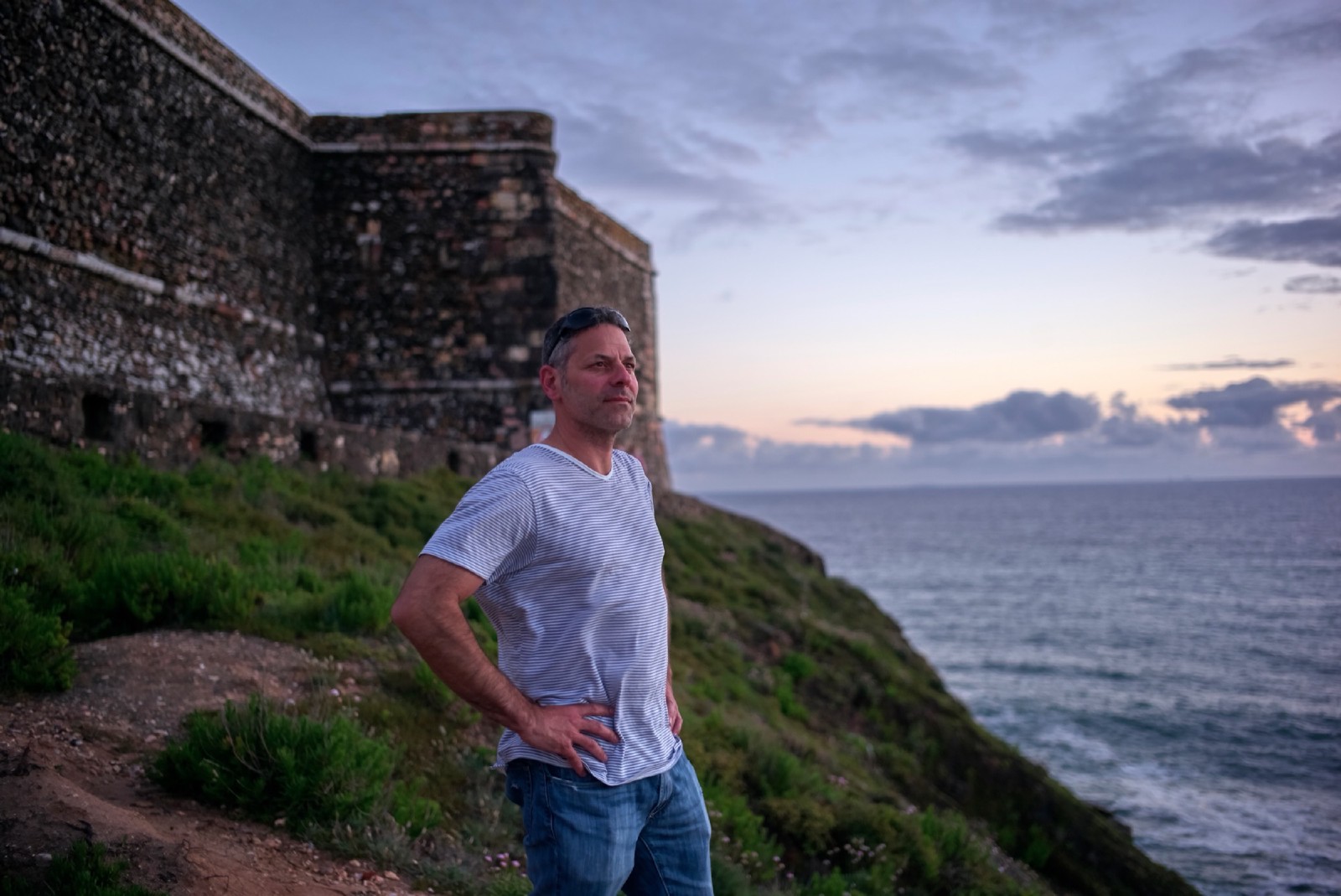
Portugal, Day 1: Lisbon on Foot
Tuesday, June 5, 2018
Reconstructed in 2026 from the photographs and memory — I didn’t keep a journal in Portugal, which I regret, so this is the trip rebuilt from the Leica files and what I can still see in my head. Shot the whole trip on the Leica M (Typ 262) with a single lens, the 35mm Summicron, which turned out to be all I needed. One correction to my memory: I never reset the camera’s clock from Georgia time, so every frame is stamped five hours early. Once you fix that, the files put the Sé, St Anthony, the Praça do Comércio, Rossio, and the port on the morning of day two, not day one — and I trust the files over my head. So this first day is shorter than I remembered it, and the second is longer.
I packed light: the M and the 35, and that was the camera the whole way. The flight over was fine once it finally got going — the hold-up was New York, where I was stuck on a much longer layover at JFK than I’d planned (something about a union-required break for the European pilots), killing hours before the overnight TAP hop across the Atlantic.
Todd beat me to Lisbon. We’d agreed to find each other at a cell-phone kiosk in the airport, and there he was. First order of business was getting connected: I bought a local SIM and dropped it into my iPhone, no trouble. Todd’s phone was a little older and not jailbroken, and for all our fiddling it just wouldn’t take the Portuguese SIM — so for the next ten days we navigated Portugal on my one working phone. It became a running thing, the two of us huddled over my screen on a corner somewhere. An added perk was that we got to listen to my playlist the whole time. Todd later cursed my inclusion of Duran Duran.
From the airport we made our way to the Airbnb, down in the southeast of the city near the water. There’s a frame I shot from inside the place that first afternoon — the light, the room, the start of it.
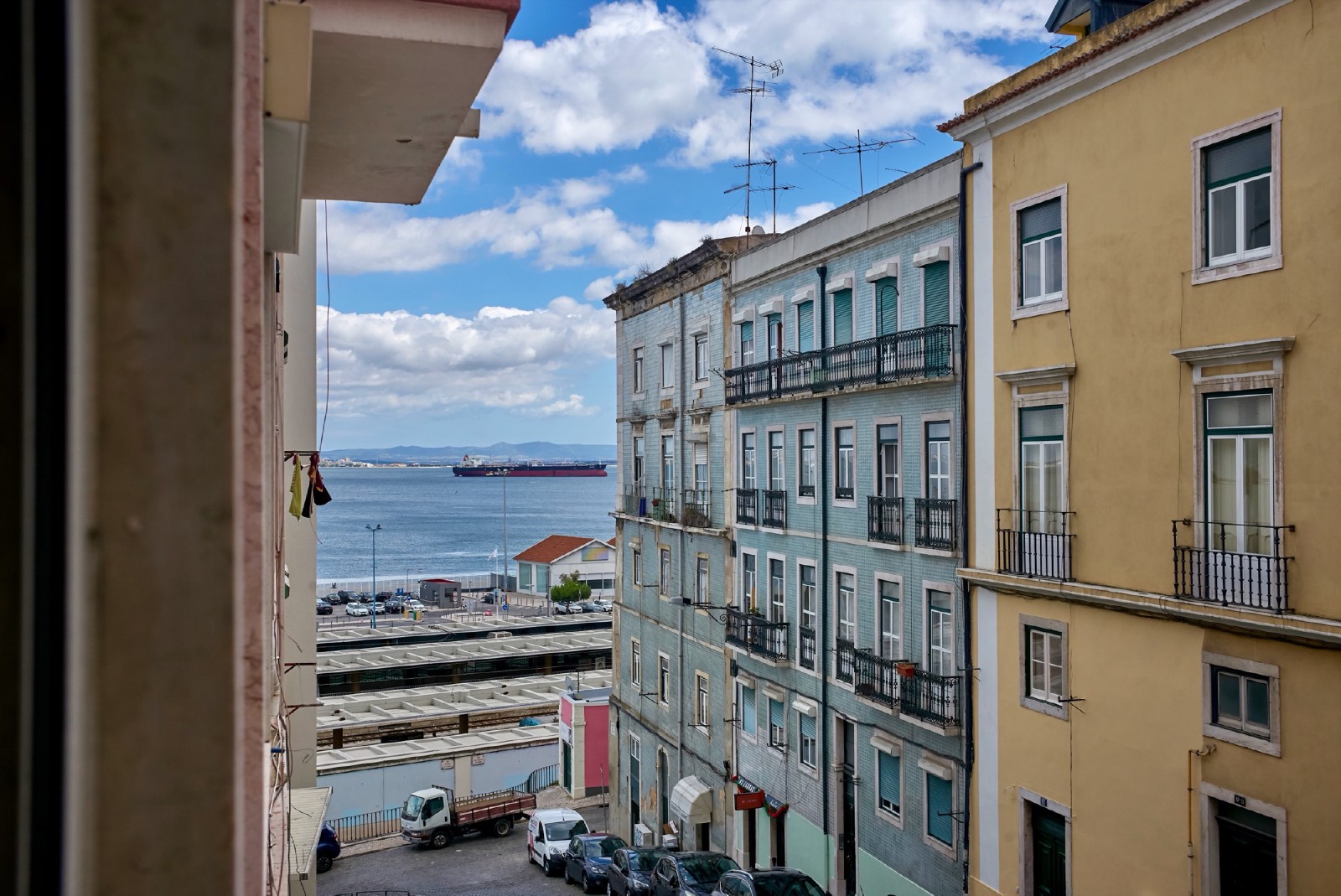
We sat for a bit, but we both knew the move was not to nap. The fastest way to beat the jet lag is to stay up and walk into the new time zone, so we got back out the door.
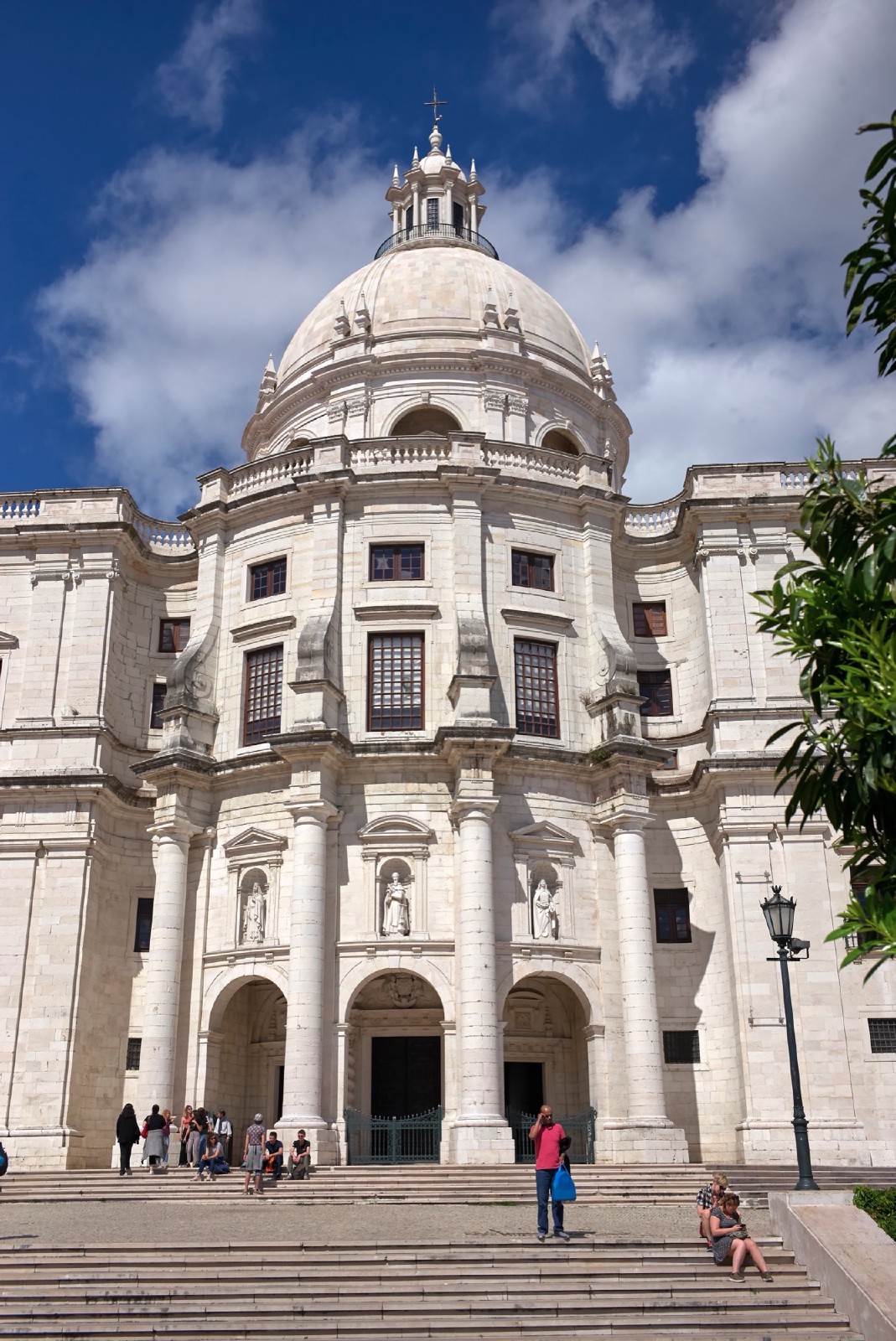
We’d lucked into a neighborhood with good things in easy reach. We climbed up to the Panteão Nacional — the great domed church of Santa Engrácia — though by the time we got there it was closed for the day, so the dome against that blue sky was all we got of it. We’d be back in the morning.
Then up again to the Castle of São Jorge, the Moorish walls looking out over the whole tumble of the city down to the Tagus. “Up” is the operative word: Lisbon is hilly, brutally so on no sleep, and one of my photos of a street is basically a wall of cobblestone tilting back at the camera.
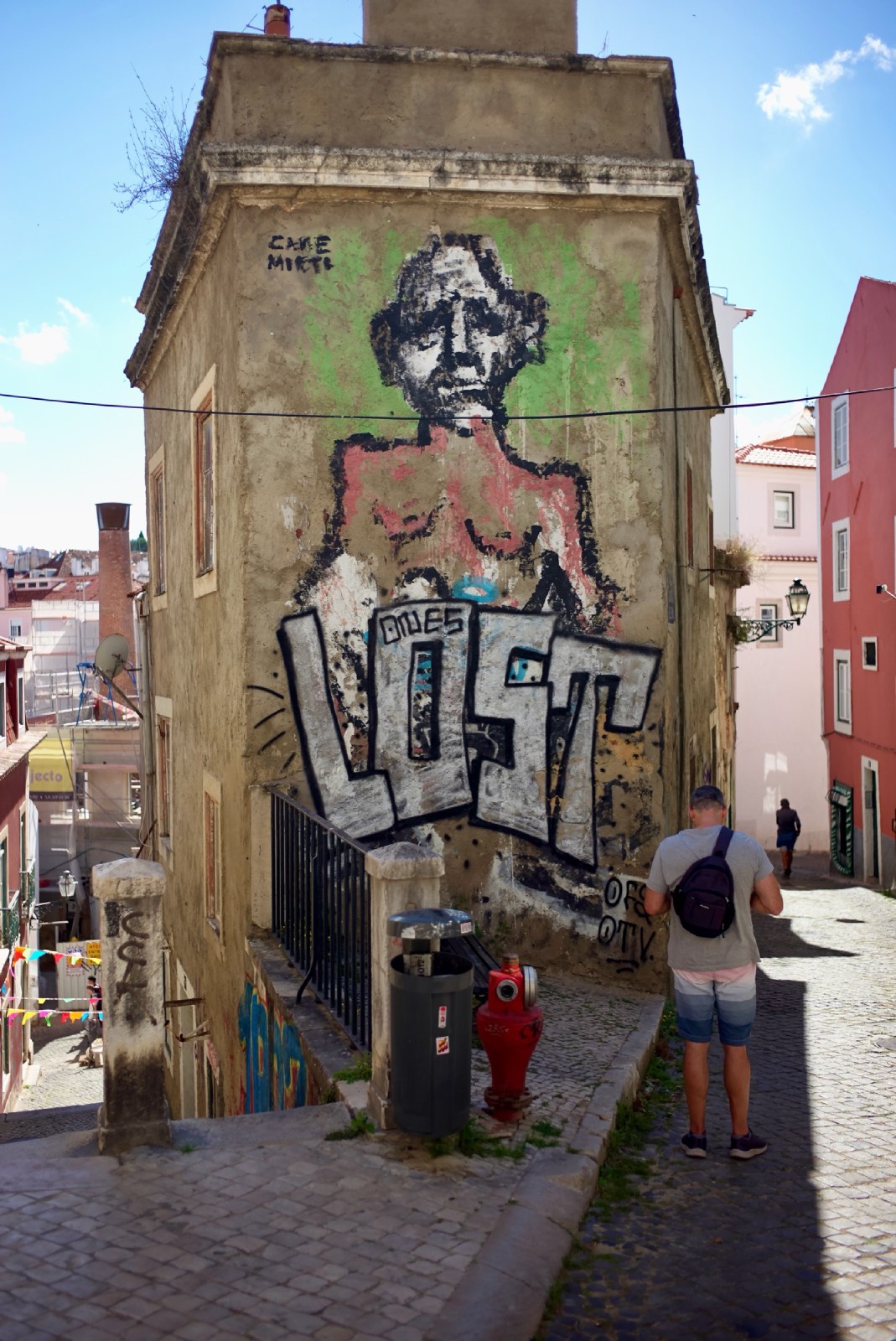
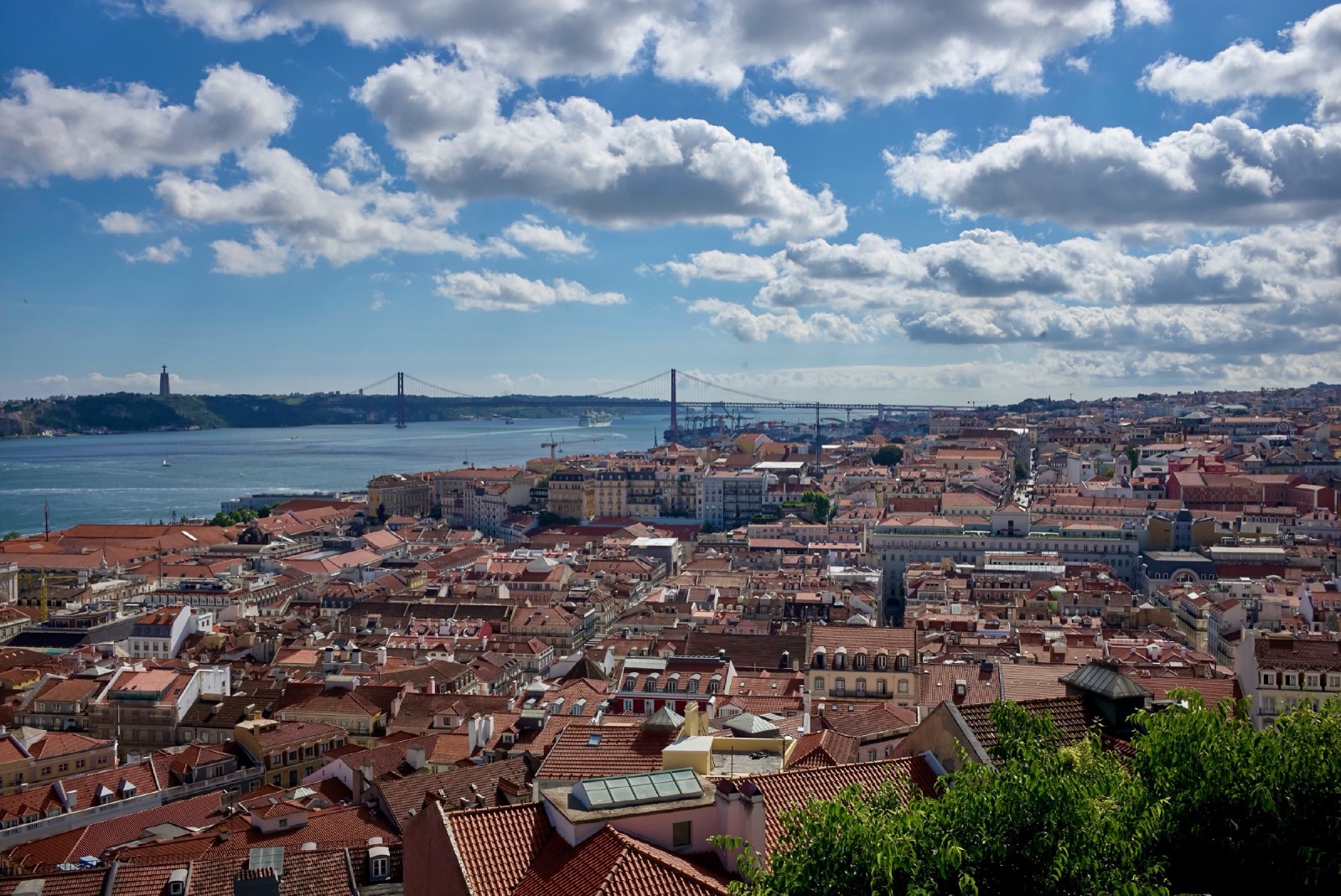
We wound down through the Alfama’s random, beautiful streets toward the river. And then, jet-lagged and footsore and a little drunk on port, we did the only sensible thing: found a few beers and a good meal, and let the first day of Portugal close around us.
Portugal, Day 2: The Baixa and Belém
Wednesday, June 6, 2018
Reconstructed in 2026 from the photographs and memory. Leica M (Typ 262), 35mm Summicron throughout. The camera’s clock was still on Georgia time, five hours behind Lisbon, which is how the whole Baixa ended up on this day rather than the first: the files say the morning of the sixth, and I believe them over my memory. It was a long day.
We went back to the Panteão Nacional first thing — it opens at ten, and we’d only had the outside of it the evening before. Inside it’s all marble and light under the dome, the floor a great inlaid compass of color, and the galleries climb up and up to a terrace that gives you the Alfama and the river, the jacarandas purple in the park below.
From there we wandered down through the Alfama’s random, beautiful streets — the bunting was already strung across the lanes for the Santo António festivities, the saint’s month — to the Sé, Lisbon’s old Romanesque cathedral, dark and heavy inside after the glare: candles going under a painting, a stone knight on his tomb, a stained-glass window burning in the dim.
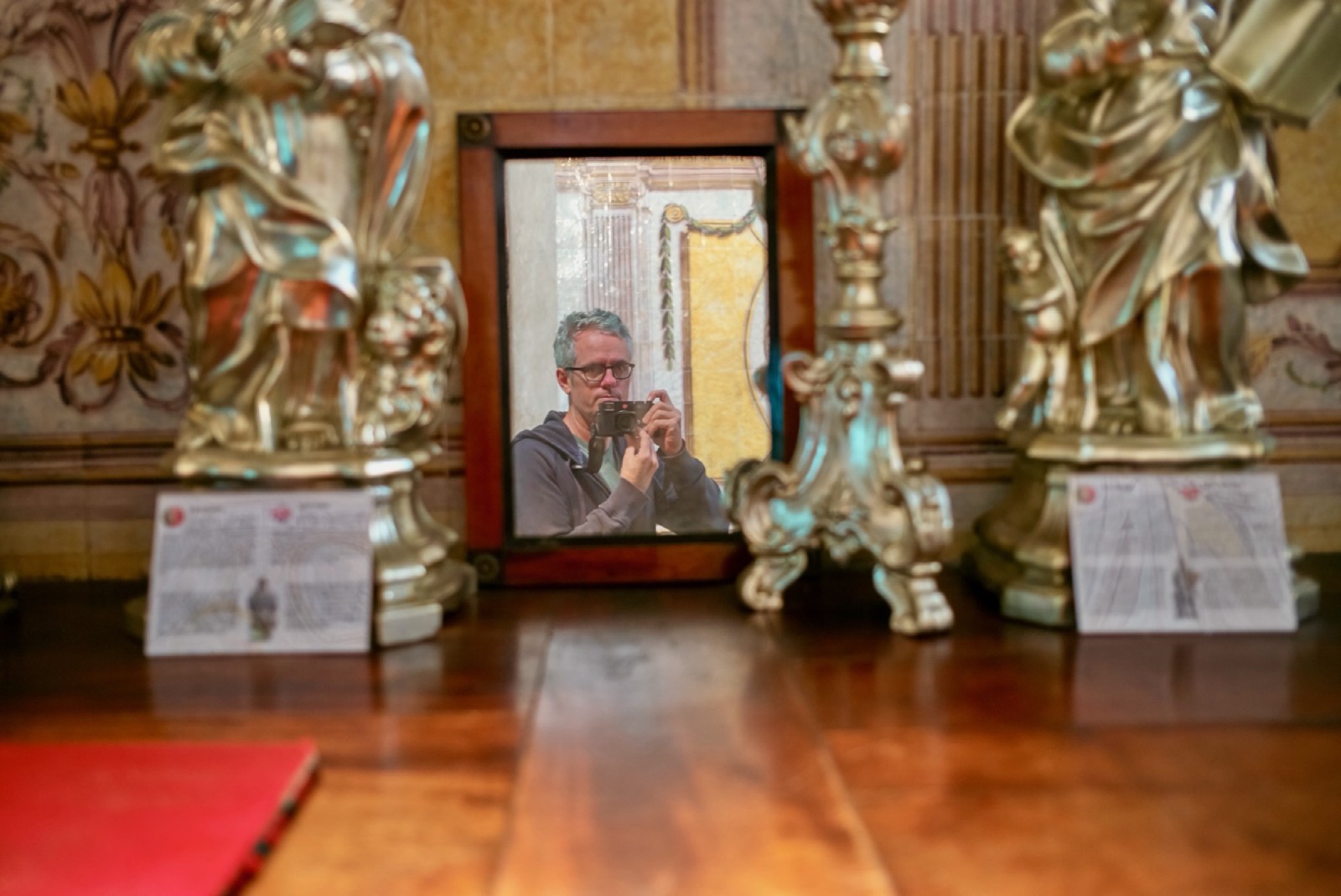
Down in the Baixa we hit the big set pieces. I made a self-portrait at the Church of St Anthony, a block from the cathedral. At the Praça do Comércio, that huge plaza opening onto the water, I lost count of how many times someone sidled up to quietly offer to sell me drugs — it became a kind of ambient feature of the square. We climbed the arch for the view straight down the Rua Augusta, then passed through Rossio, with its rolling wave-patterned pavement.
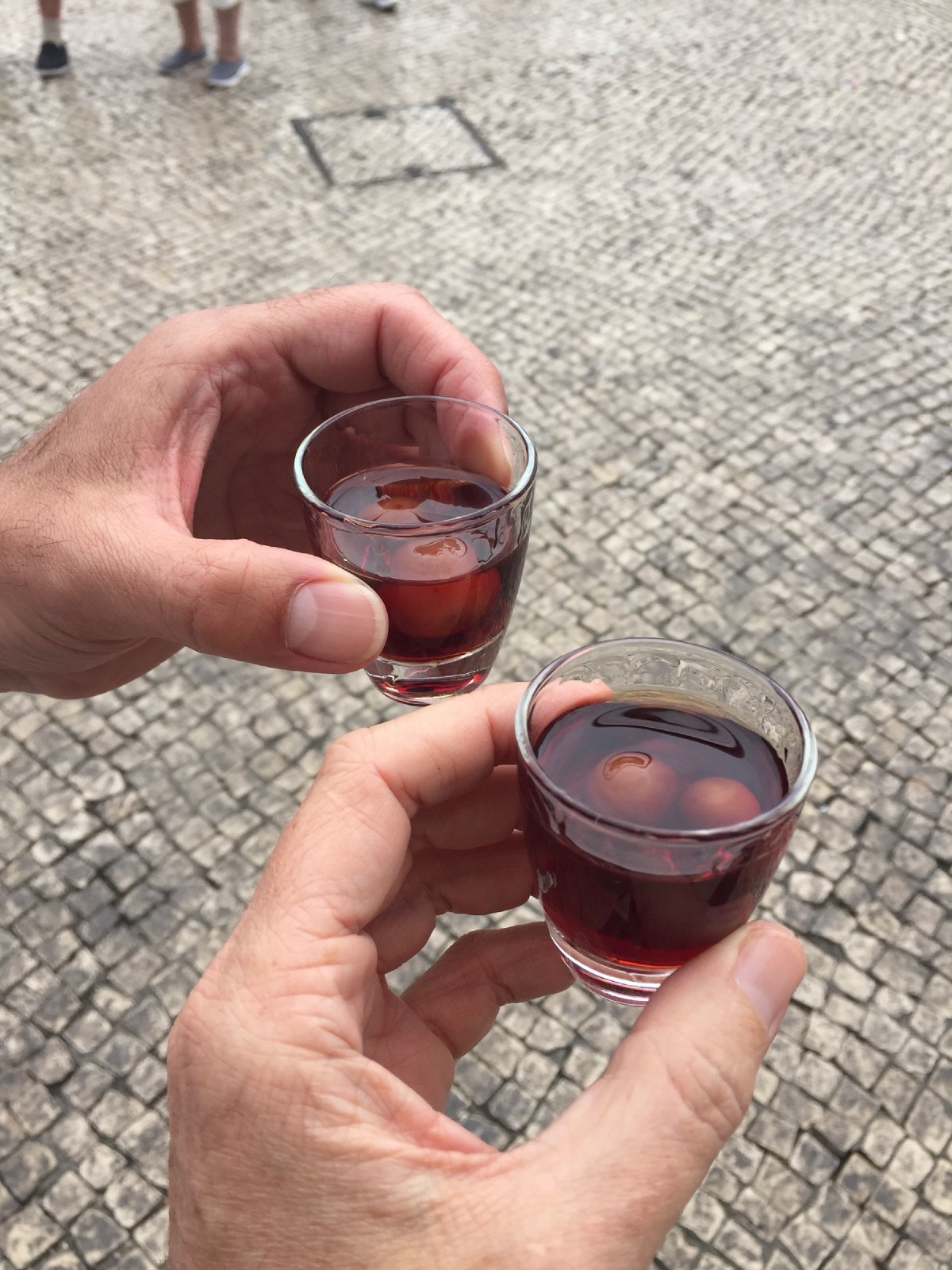
Port wine was for sale absolutely everywhere, and we sampled it liberally and without much discipline; somewhere in there we also got into the local cherry liqueur — ginjinha, served in a little cup, sweet and strong — which I photographed because I wanted to remember it. The ginjinha stand is on the little square beside Rossio, and next door is the church of São Domingos, which burned in 1959 and was reopened with the scorch still on the pillars. We ducked in with the cherry on our breath.
In the afternoon we pointed ourselves west, out to Belém, and took the subway to get there — the first time we’d let the city carry us instead of climbing it on foot.
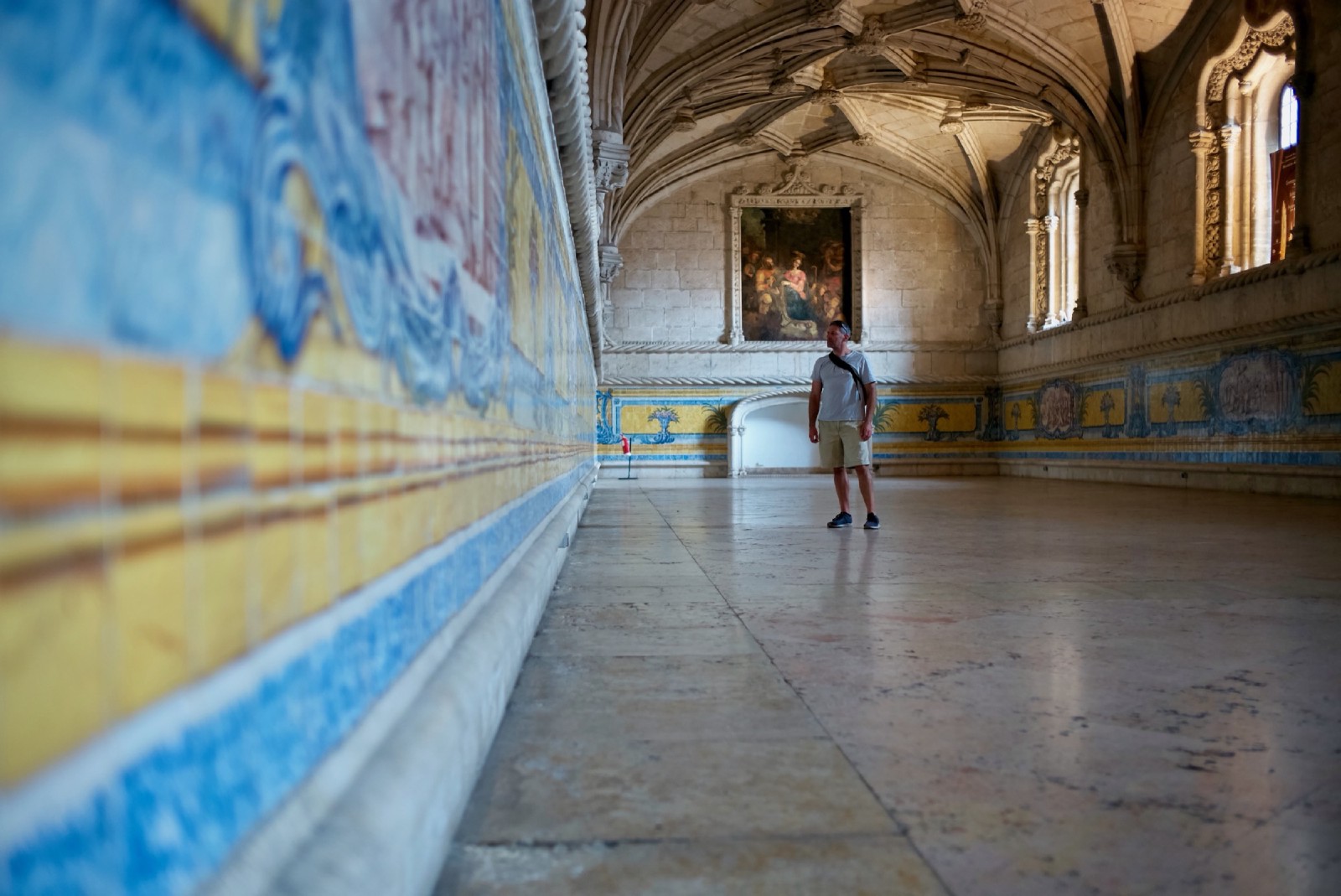
The reason you go to Belém is the Jerónimos Monastery, and it earns it. Manueline stone worked until it looks like rope and coral and seaweed turned to lace — the whole maritime imagination of Portugal’s golden age poured into a cloister. I shot it from a half-dozen angles and still didn’t feel like I’d gotten it.
From there it’s a short walk to the water and the Belém Tower, which was very cool from the outside — and closed, so the outside was all we got. Right nearby stands the Monument to the Discoveries, that great prow of a thing crowded with explorers leaning out toward an ocean they had no real idea the size of. There’s something I like and distrust in equal measure about a monument like that, the romance of “discovery” with all its costs sanded off, but as a piece of sculpture against the Tagus it’s hard to beat.
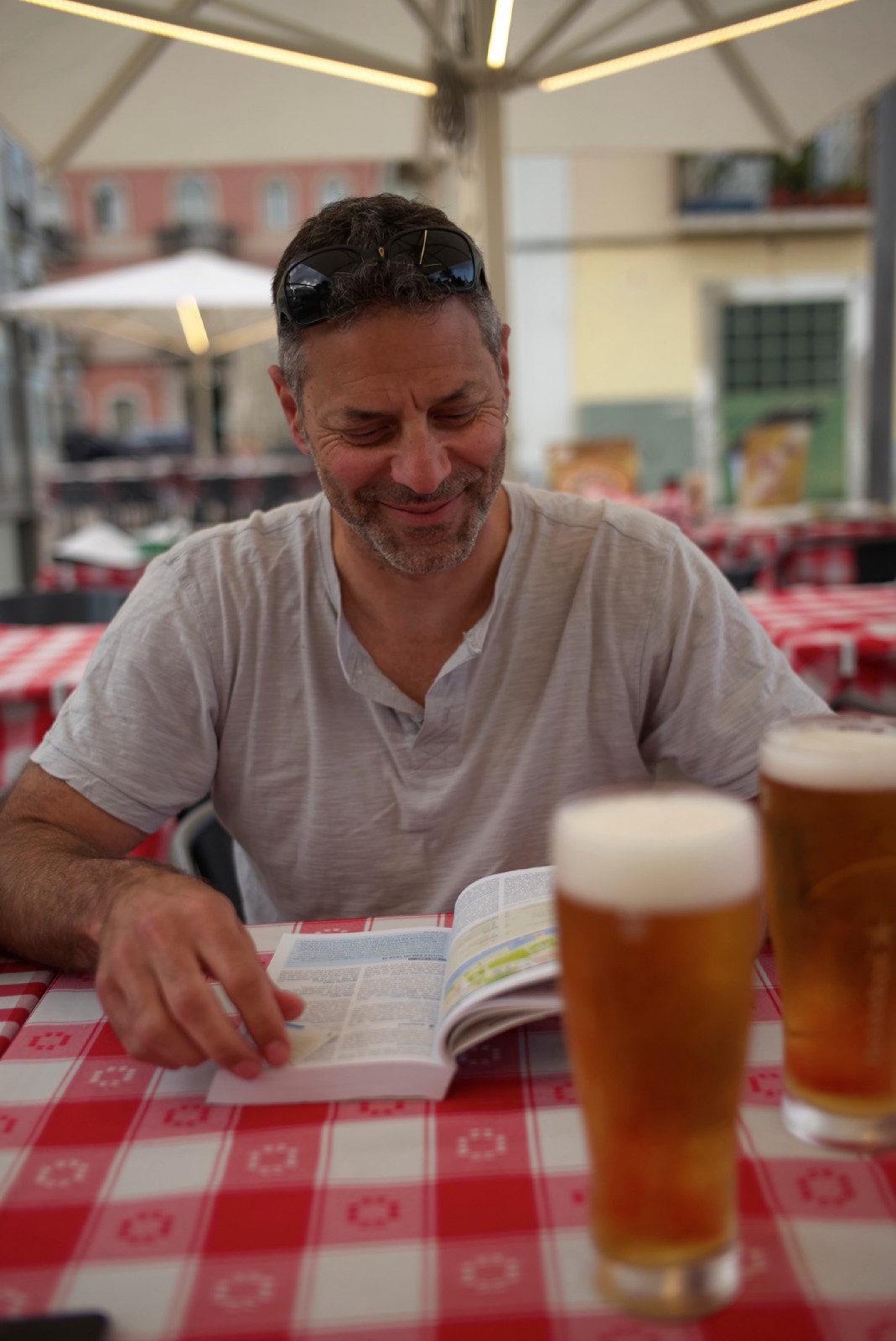
We ended up at an outdoor café in the Vasco da Gama Garden, and that’s the frame that’s become the keeper from this trip: Todd across the red-and-white checkered cloth, two beers and an open guidebook between us, white umbrellas and pastel buildings behind.
It’s the picture that says what the trip actually was — two friends, a couple of beers, a guidebook, no real agenda beyond seeing the thing in front of us.
And, as had already become the rule, the day ended the right way: a few beers and a nice meal.